Iya Valley Guide: Vine Bridges and Mountain Villages in Shikoku, Japan
October 14, 2026 · 5 min read
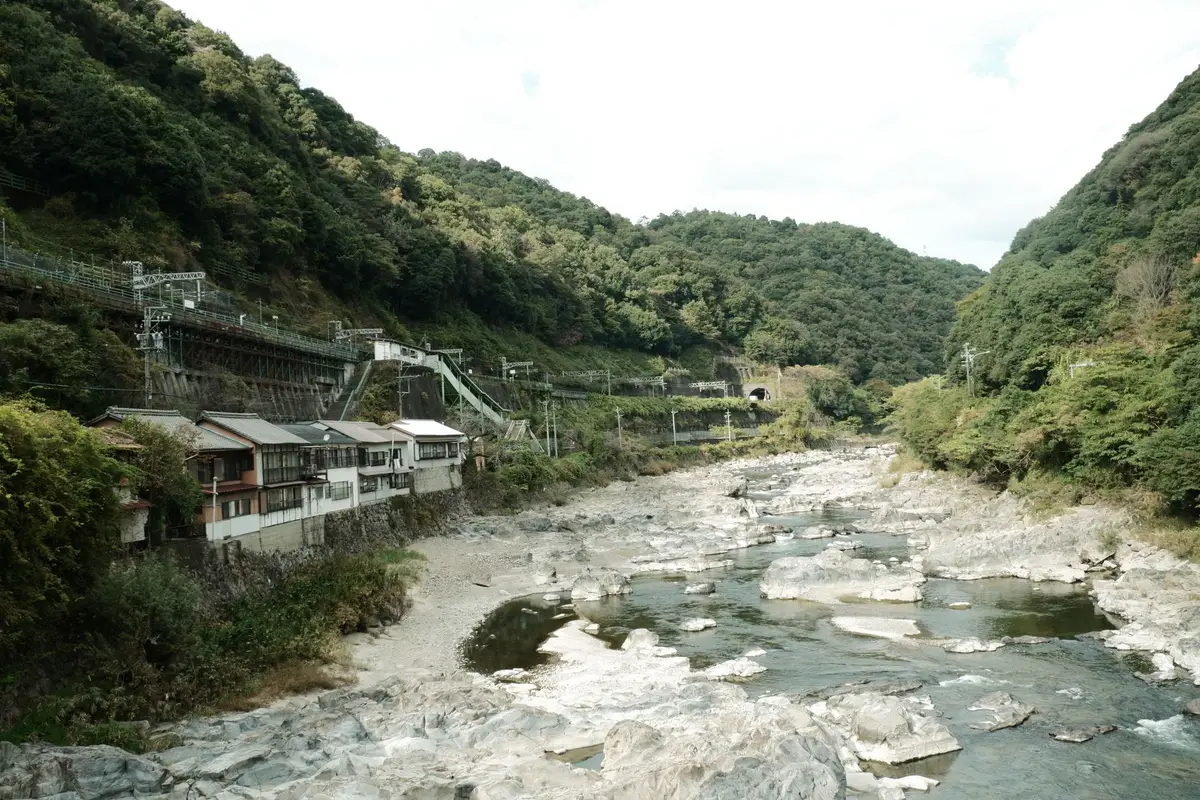
If Kyoto feels like a theme park in peak season, Iya Valley is the antidote. Hidden in the mountains of western Tokushima Prefecture on the island of Shikoku, this deep V-shaped valley is known for swaying vine bridges, emerald rivers and villages clinging to steep slopes. It was once so isolated that it was said to be a refuge for defeated samurai of the Heike clan, and even today it feels like a different Japan.
This guide covers what to see, how to get to Iya Valley, where to stay and the nearest airport, so you can plan the trip in one go.
Quick facts
| Where | Miyoshi City, western Tokushima Prefecture, Shikoku |
| Nearest airport | Takamatsu (TAK); Kochi (KCZ) and Tokushima (TKS) are also options |
| Nearest station | JR Oboke Station (Dosan Line) |
| Best time | Late October to mid-November for autumn colors; summer for rafting |
| Time needed | 2 days minimum, 3 days is ideal |
| Getting around | A rental car is by far the easiest; local buses are infrequent |
Why Iya Valley is worth the trip
Most first-time visitors to Japan never leave the Tokyo–Kyoto–Osaka line. Shikoku, the smallest of Japan's four main islands, sees a fraction of those crowds, and Iya is one of its most remote corners. You come here for nature, silence and a slower pace: cedar forests, river gorges, thatched farmhouses and very few tour buses.
Top things to do in Iya Valley
1. Cross the Iya Kazurabashi vine bridge
The valley's icon is the Iya Kazurabashi, a suspension bridge woven from mountain vines. It is roughly 45 meters long and hangs about 14 meters above the river. The vines are replaced every three years, and the gaps between the wooden slats are wide enough to make your knees shake. A small entrance fee applies. Go early in the morning to cross without a queue.
2. Find the Oku-Iya double vine bridges
Deeper in the valley, the Oku-Iya Niju Kazurabashi are a pair of vine bridges side by side, often called the "husband and wife" bridges. They are much quieter than the main bridge, and nearby you can pull yourself across the river in a small hand-powered cable cart called a yaen.
3. Take a boat through Oboke Gorge
At the entrance to the valley, the Yoshino River has carved Oboke and Koboke gorges through crystalline rock. A sightseeing boat at Oboke takes you between the cliffs in about half an hour. The Yoshino River is also one of Japan's best rafting rivers and hosted the World Rafting Championship in 2017, so summer visitors can try white-water rafting with local outfitters.
4. Look down from the Peeing Boy statue
On the old Iya Kaido road, a small statue of a boy stands on a rock that juts out over a sheer drop into the gorge. Legend says local children tested their courage here. It is a quick stop, but the view straight down is unforgettable.
5. Walk through Ochiai Village
Ochiai is a village of old farmhouses spread across a steep slope, with terraced fields and stone walls connecting them. It is protected as one of Japan's Important Preservation Districts for Groups of Traditional Buildings. The best view of the whole village is from the observation point across the valley, especially in the soft light of late afternoon.
6. Hike Mount Tsurugi
At 1,955 meters, Mount Tsurugi is the second-highest peak in western Japan. A chairlift takes care of much of the climb, and from there the summit is an easy hike over wooden walkways with views across the Shikoku mountains.
How to get to Iya Valley
By air: Takamatsu Airport (TAK) is the most convenient gateway for international visitors, with flights from Tokyo and some international routes from East Asia. Kochi (KCZ) and Tokushima (TKS) airports also work, mainly with domestic flights. From any of them, renting a car is the easiest way to continue.
By train: The JR Dosan Line connects Okayama and Takamatsu with Kochi. Limited express trains stop at Oboke Station, the gateway to the valley. From Okayama, the ride takes about 1.5 to 2 hours.
By bus: Local buses run from Oboke Station toward the Kazurabashi bridge, but services are limited, especially outside the main season. Check the timetable before you go and plan your day around it.
By car: Roads in the valley are narrow and winding, with some single-lane sections. Drive slowly and use the pull-outs to let other cars pass. In winter, snow and ice are possible at higher elevations.
Where to stay
Staying overnight is what makes Iya special. Options range from hot-spring hotels perched above the gorge, some with cable cars down to riverside baths, to restored thatched-roof farmhouses you can rent for yourself. Chiiori, a centuries-old farmhouse restored with the help of writer Alex Kerr, is the most famous example. Book early for autumn weekends, as rooms are limited.
Sample 2-day itinerary
- Day 1: Arrive at Takamatsu, drive or take the train to Oboke. Take the Oboke Gorge boat, stop at the Peeing Boy statue, then check in to a valley hotel and enjoy the hot spring.
- Day 2: Cross the Iya Kazurabashi early, continue to Ochiai Village and the Oku-Iya double vine bridges, and drive back out in the afternoon.
Add a third day for Mount Tsurugi or a rafting trip.
Tips before you go
- Bring cash. Some small shops, restaurants and attractions do not accept cards.
- Fill up the tank. Gas stations are few once you are deep in the valley.
- Download offline maps. Mobile signal can be weak in parts of the gorge.
- Try the local food. Look for Iya soba, a rustic buckwheat noodle, and dekomawashi, skewers of grilled potato, tofu and konjac with miso.
FAQ
Is Iya Valley worth visiting? Yes, if you want nature, traditional villages and few crowds. It takes some effort to reach, which is exactly why it still feels untouched.
How many days do you need in Iya Valley? Two days covers the highlights. Three days lets you add Mount Tsurugi, rafting or simply more time to relax.
Can you visit Iya Valley without a car? Yes, by train to Oboke Station and local buses, but buses are infrequent. A car gives you far more flexibility.
What is the nearest airport to Iya Valley? Takamatsu Airport (TAK) is the most practical for most visitors. Kochi (KCZ) and Tokushima (TKS) are also within reach.
Planning the trip? Check today's lowest fares to Japan and look for flights into Takamatsu.