Akigawa Valley Guide: Tokyo's Riverside Escape in Akiruno, Japan
Published · 8 min read
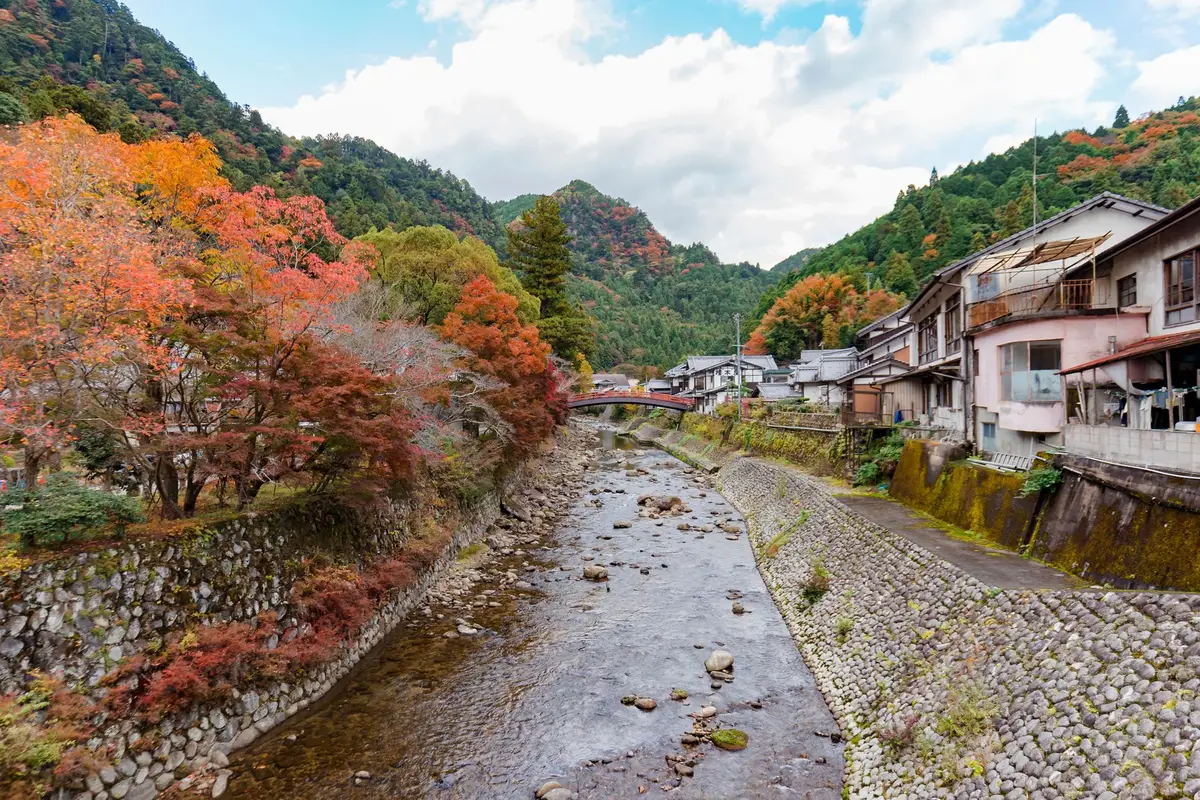
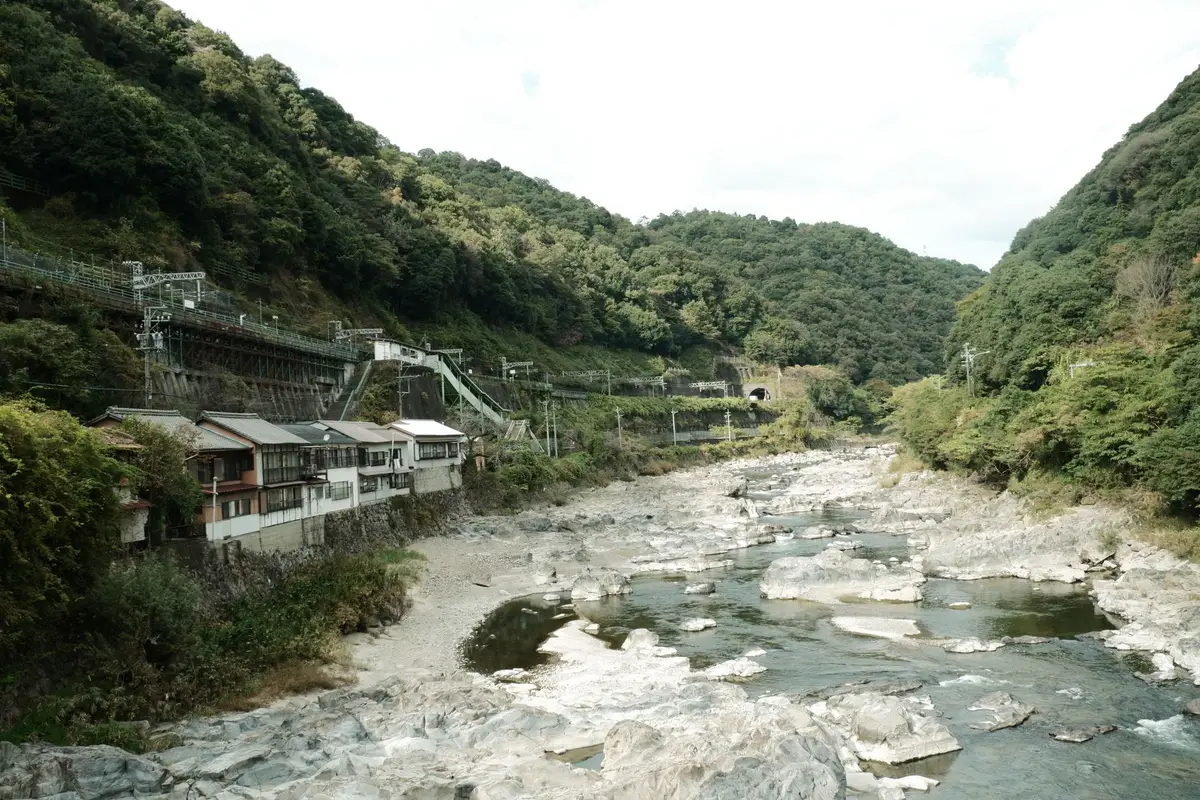
Akigawa Valley (Akigawa Keikoku, the gorge of the Aki River) is a clear mountain river in the far west of Tokyo, where the city gives way to forested hills. It runs for about 20 km from Akiruno City up into Hinohara Village, and the Akiruno Tourism Association promotes it as "great nature about 60 minutes from central Tokyo."
Western Tokyo's better-known mountain areas such as Takao and Okutama draw most of the attention, and Akigawa is rarely covered in English. The gentle terrain makes it easy to walk, and you can combine a suspension bridge, a riverside hot spring and a limestone cave in one day. This Akigawa Valley guide covers what to do, how to get there from the airports and the practical details that are mostly published only in Japanese.
Quick facts
| Where | Akiruno City, western Tokyo (the Otsu and Tokura districts), extending into Hinohara Village |
| Nearest airport | Haneda (HND) or Narita (NRT), both serving Tokyo (TYO) |
| Nearest station | Musashi-Itsukaichi Station, the end of the JR Itsukaichi Line |
| Best time | Mid-November to early December for autumn leaves; May to June for fresh green leaves |
| Time needed | A full day trip from central Tokyo |
| Getting around | Local buses from Musashi-Itsukaichi Station, then on foot |
Why Akigawa Valley is worth the trip
Akigawa Valley lies inside Chichibu-Tama-Kai National Park, yet it is still inside Tokyo's city limits and on a regular JR commuter line. That makes it one of the easiest ways to see a clear mountain river, wooded hills and a village landscape without an overnight trip.
It also suits travelers who like to do a little of everything. Within a short bus ride of the station you can cross a suspension bridge over the river, soak in a hot spring with river sounds in the background, explore a cave that is a Tokyo natural monument and try trout fishing. In autumn, the leaves along the river turn red and gold, and in late spring the valley is green and calmer than in peak leaf season.
If you are spending most of your trip in the city, Akigawa is a good contrast to old neighborhoods like Yanaka. For more ideas, see our hidden gems in Tokyo hub.
Top things to do in Akigawa Valley
1. Cross Ishifune Bridge
Ishifune Bridge (Ishifune-bashi) is a 96 m pedestrian suspension bridge over the Aki River in the Otsu area. It was built to give walkers access to the Seoto no Yu hot spring on the other bank, and it is the classic place to look up and down the gorge. GO TOKYO, the city's official tourism site, and the Akiruno Tourism Association both list it as the best spot to see the autumn leaves. Bring a camera: from the middle of the bridge you see the blue-green water against the trees.
2. Soak at Seoto no Yu
Seoto no Yu (the name means roughly "hot spring of the sound of the river") is a day-use hot spring facility a few minutes' walk from Ishifune Bridge. It was built by Akiruno City and opened in 2007 as the main facility of the valley. GO TOKYO describes the water as fairly alkaline with a smooth, slippery feel, which is why it is known locally as a "beautiful skin" hot spring. There is an outdoor bath surrounded by rocks and a free footbath outside.
The complex also has a shop selling local products, a restaurant that uses local ingredients and a small number of cottages for overnight stays. Check the official site for current hours, prices and any closures before you go.
3. Explore Otake Limestone Cave
Otake Limestone Cave (Otake Shonyudo) lies further up the Yozawa valley, a side valley of the Akigawa. It was discovered in October 1961, opened to the public the following year and is designated a Natural Monument of Tokyo. The passages run for about 300 m, are lit by electric lights and are narrow and twisting in places, so helmets are lent at the entrance. There is also a short, tighter "challenge course." The cave entrance is about 490 m above sea level, and the inside stays at roughly 11 to 13 °C, so it feels cool in summer and mild in winter.
Nearby, the smaller Mitsuai Limestone Cave reopened in 2022, according to the Akiruno Tourism Association.
4. Try trout fishing by the river
The Akigawa International Trout Fishing Ground (Akigawa Kokusai Masu Tsuriba) in Yozawa is run by the local fishing cooperative. GO TOKYO notes that you can grill the fish you catch on the spot as a barbecue. Rods and bait are available for an extra charge, so you do not need to bring your own gear. Fly fishers can also use the nearby Yozawa fly-fishing-only stream.
5. Walk a riverside route from the tourism association
The Akiruno Tourism Association publishes free walking maps called "Akigawa Valley: Walking Through the Four Seasons," in Japanese. The routes include "walking along the river" in the Tokura area and "walking the hot spring village" in Otsu and Yozawa, which is the area around Ishifune Bridge and Seoto no Yu. You can pick them up at the Itsukaichi tourist information office near the station or download them from the association's website.
How to get to Akigawa Valley
By air: Fly into Tokyo, either Haneda (HND) or Narita (NRT). From either airport, take the train into central Tokyo first.
By train: From central Tokyo, take the JR Chuo Line west and change at Haijima (or at Tachikawa for the Ome Line to Haijima) for the JR Itsukaichi Line. Ride it to the last stop, Musashi-Itsukaichi Station. The tourism association puts the trip at about 60 minutes from central Tokyo, though it depends on your connections.
By bus: From Musashi-Itsukaichi Station, take a Nishi Tokyo Bus bound for Kami-Yozawa. Get off at Jurigi bus stop (about 11 minutes) for Ishifune Bridge and Seoto no Yu, which are about a six-minute walk away. For Otake Limestone Cave, stay on the same bus to the Otake Shonyudo Iriguchi stop (about 27 minutes) and walk uphill for about 26 minutes. Check the return bus times before you set off up the valley.
By car: Akigawa Valley is about 9 km from Akiruno IC on the Ken-O Expressway. The free Jurigi parking lot has only around 20 to 25 spaces, so the official leaf-viewing guide suggests using the paid lots near Musashi-Itsukaichi Station instead.
Where to stay
Most travelers visit Akigawa Valley as a day trip and stay in central Tokyo. Shinjuku is a practical base, because the JR Chuo Line runs west from there toward Haijima and Tachikawa, and it has a wide choice of hotels at every budget. If you want to wake up in the valley, Seoto no Yu has a small number of cottages next to the hot spring; book early for the autumn leaf season.
Sample itinerary: a day in Akigawa Valley
- Morning: Take the JR Itsukaichi Line to Musashi-Itsukaichi. Stop at the tourist information office for a walking map, then catch the bus toward Kami-Yozawa.
- Late morning: Ride to the Otake Shonyudo Iriguchi stop and walk up to Otake Limestone Cave.
- Lunch: Head back down the valley and try fishing and grilling trout at the Akigawa International Trout Fishing Ground, or eat at the Seoto no Yu restaurant.
- Afternoon: Get off at Jurigi, cross Ishifune Bridge and walk along the river.
- Late afternoon: Finish with a soak at Seoto no Yu, then take the bus back to the station.
If you only have half a day, skip the cave and focus on Ishifune Bridge and Seoto no Yu.
Tips before you go
- Watch the river. The tourism association warns that the water can rise suddenly, especially with thunderstorms. Leave the riverbank quickly if the water changes, and do not enter the river where swimming is prohibited.
- Barbecue rules. If you barbecue on the riverbank, use a grill rather than an open fire on the ground, and take all your trash home.
- Taste Tokyo's only soy sauce brewery. Kondo Jozo in Akiruno makes Kikkogo soy sauce from Japanese soybeans and wheat and calls itself the only soy sauce factory in Tokyo. It has a direct sales shop next to the brewery, a good place for a local souvenir.
- Come back in late September. The Akiru Shrine Grand Festival, known locally as the Itsukaichi Festival, fills the main street near the station at the end of September, with a hexagonal portable shrine, mikoshi, weighing over 100 kan (about 375 kg), five children's shrines and a night parade of festival floats.
- Or in June. Minamisawa Ajisai-yama, a hillside of about 10,000 hydrangeas, blooms from mid-June to early July. It is about a 40-minute walk from Musashi-Itsukaichi Station along a hiking path.
- Ask in Japanese if you can. The Itsukaichi tourist information office (run by the Akiruno Tourism Association) is in the Itsukaichi area near the station. Opening days vary, so check ahead.
FAQ
Is Akigawa Valley worth visiting? Yes, if you want clear rivers and forested hills without leaving Tokyo. It is less known abroad than Takao or Okutama and combines a suspension bridge, a hot spring and a cave in one day trip.
How do I get to Akigawa Valley from Shinjuku? Take the JR Chuo Line to Haijima or Tachikawa, change to the JR Itsukaichi Line to Musashi-Itsukaichi, then take a Nishi Tokyo Bus to Jurigi for Ishifune Bridge.
When are the autumn leaves at Akigawa Valley? Usually from mid-November to early December. It is the busiest time of year, so come on a weekday if you can.
Can I swim in the Aki River? Swimming is prohibited in some places, and the tourism association warns that the water can rise suddenly. Follow local signs and warnings.
Planning the trip? Check today's lowest fares to Japan and look for flights into Tokyo (Haneda or Narita).