Inunakisan Guide: Waterfalls and Mountain Monks Near KIX, Japan
Published · 8 min read
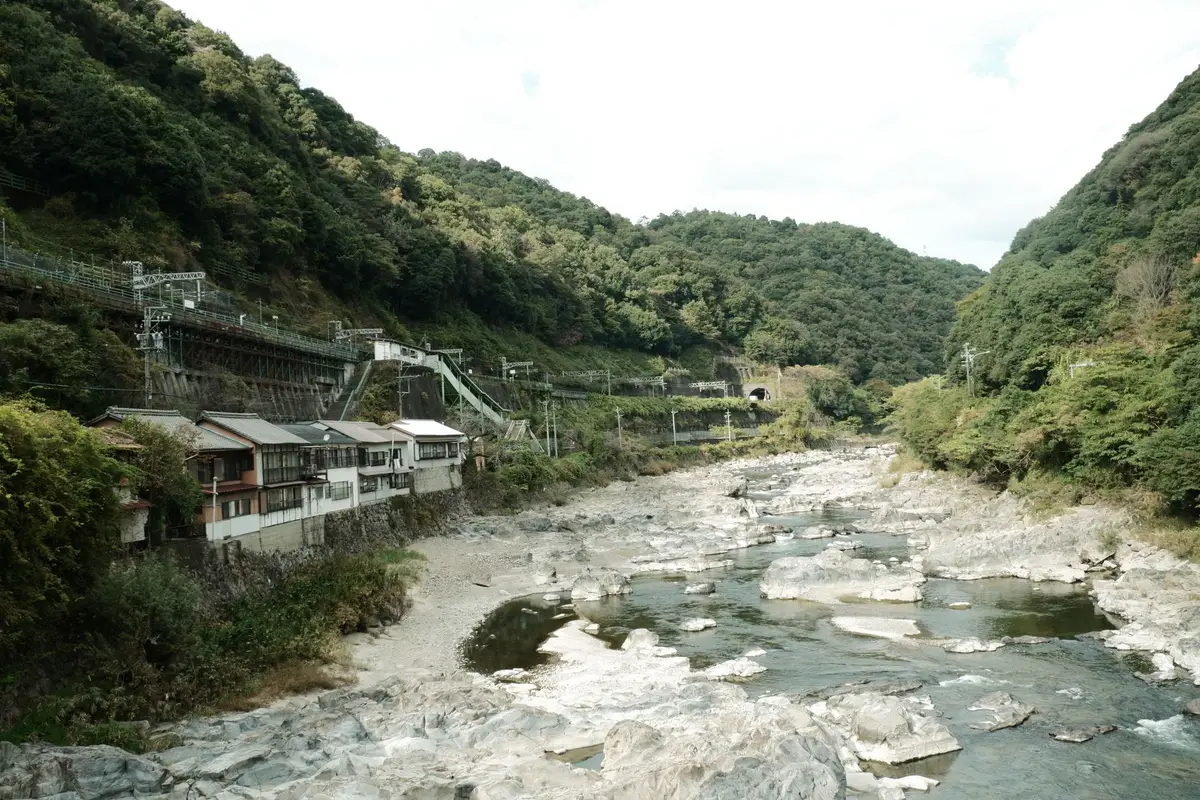
Inunakisan is a forested mountain valley in Izumisano, southern Osaka, where mountain ascetics called yamabushi still train under waterfalls. At its heart is Shipporyuji Temple, which by tradition was founded in 661, and a stream path that climbs past small shrines, stone lanterns and some of the valley's 48 waterfalls.
What makes it unusual is where it is. Izumisano is the city on the mainland side of the bridge to Kansai International Airport (KIX), so this old training ground sits a short train and bus ride from the runway. Most travelers pass straight through on the way to Namba or Kyoto. This Inunakisan guide is built from what the temple, Izumisano City and the Japan Heritage program publish in Japanese, for anyone who wants a quiet first or last day in Japan.
Quick facts
| Where | Oki district, Izumisano City, southern Osaka Prefecture, in the Izumi Katsuragi mountains |
| Nearest airport | Kansai International (KIX), serving Osaka (OSA) |
| Nearest station | Izumisano Station (Nankai Line) or Hineno Station (JR Hanwa Line), then a Nankai bus to the Inunakisan terminus |
| Best time | Autumn for leaves along the stream path; April 29 or the first Sunday of November for fire-walking festivals |
| Time needed | Half a day; a full day with a hot spring bath |
| Getting around | On foot along a stream-side path from the bus terminus to the temple and waterfall |
Why Inunakisan is worth the trip
Inunakisan belongs to Katsuragi Shugen, the mountain tradition of the ridge that runs along the borders of Osaka, Wakayama and Nara. In 2020 Japan's Agency for Cultural Affairs recognized it as Japan Heritage under the title "Katsuragi Shugen: the birthplace of Shugendo, protected and handed down together with the villagers." The story centers on 28 sutra mounds that, by tradition, En no Gyoja, the founder of Shugendo, set along the range. Shipporyuji calls itself the head training ground of these 28 sites, and the whole valley is laid out as a pilgrimage circuit.
It is also a living temple, not a museum. Shipporyuji is the head temple of the Inunaki school of Shingon Buddhism, and since 1950 it has housed a headquarters for Shugendo. Its yearly calendar is full of fire rituals, fire-walking and waterfall training. Izumisano City notes that Shipporyuji is a component of all three of the city's Japan Heritage stories.
The name means "dog barking mountain." According to the temple, in 890 a hunter's dog barked to warn him of a giant snake, and Emperor Uda later gave the mountain its name in the dog's honor. A statue of the faithful dog stands in the temple grounds.
For more ideas in and around the city, the hidden gems in Osaka hub collects our other guides to the prefecture.
Top things to do in Inunakisan
1. Walk the stream path to the main hall
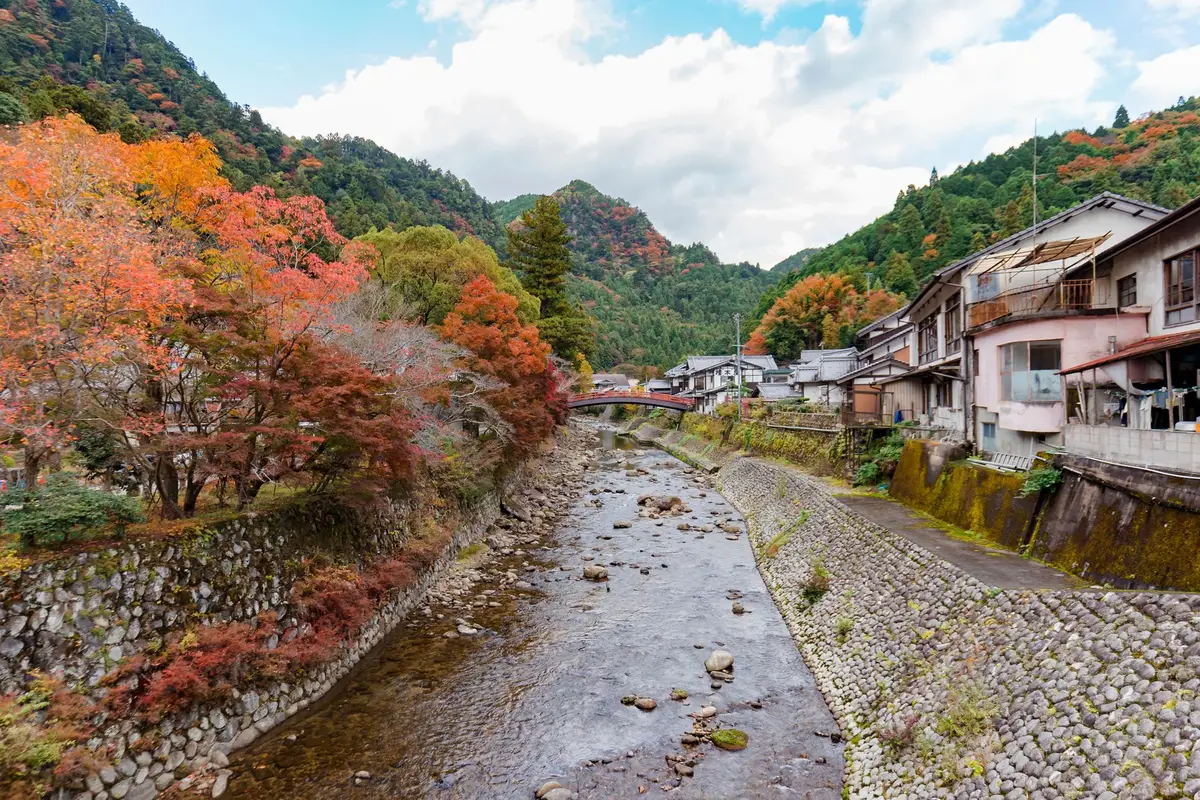
From the bus terminus it is about 150 m to the mountain gate, then roughly 900 m more up the valley to the main hall, according to the temple. The path follows the stream, passes a red torii-style gate, small shrines and stone lanterns, and is not steep. Osaka's official tourism site describes this stretch as one of the best places in the prefecture for autumn color. The valley is also listed among the "100 best green spaces in Osaka."
2. See Gyoja-no-taki, the training waterfall
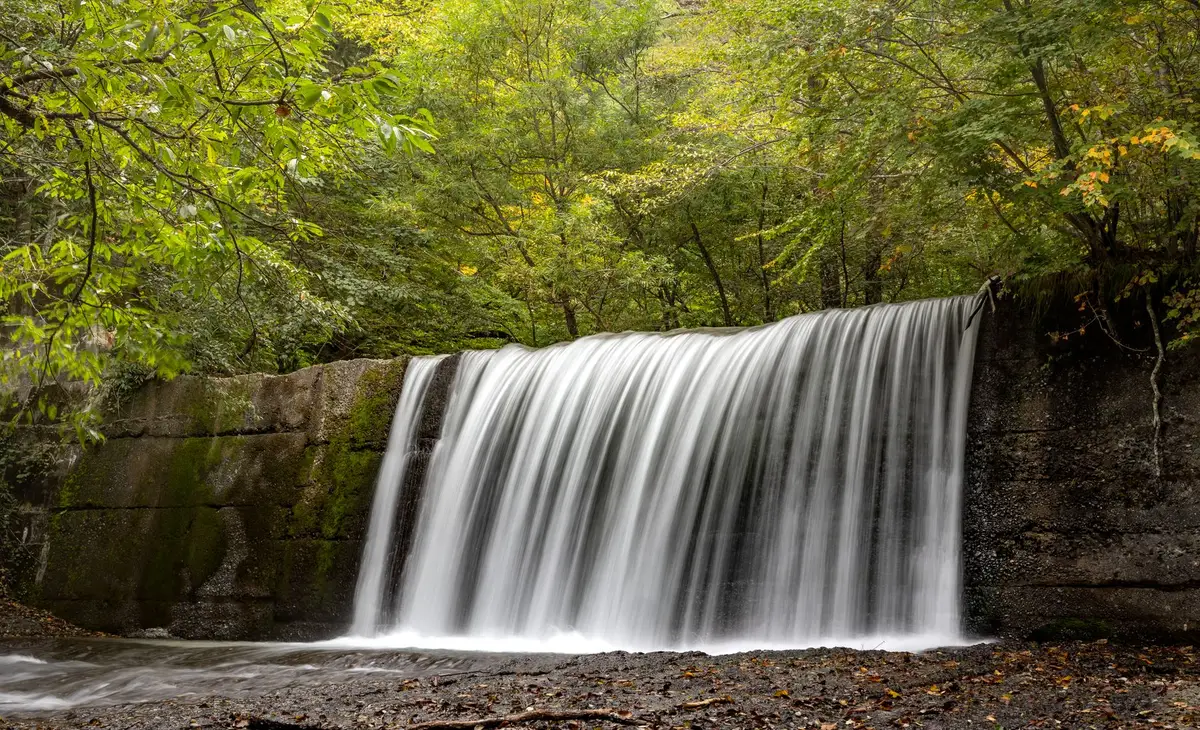
Gyoja-no-taki is about 10 m high and lies around 300 m beyond the main hall, according to the Japan Heritage Katsuragi Shugen site. Both En no Gyoja and Kukai (Kobo Daishi) are said to have trained under it, and today it is where yamabushi stand under the falling water. A chain runs up beside it for the training climb. A small donation is asked to approach the fall, so carry coins.
The temple names seven representative falls, from Ryokai-no-taki at the lower end to Senju-no-taki. The name Shipporyuji ("seven treasures waterfall temple") comes from a legend that Kukai placed jewels at these seven falls.
3. Look inside the temple buildings
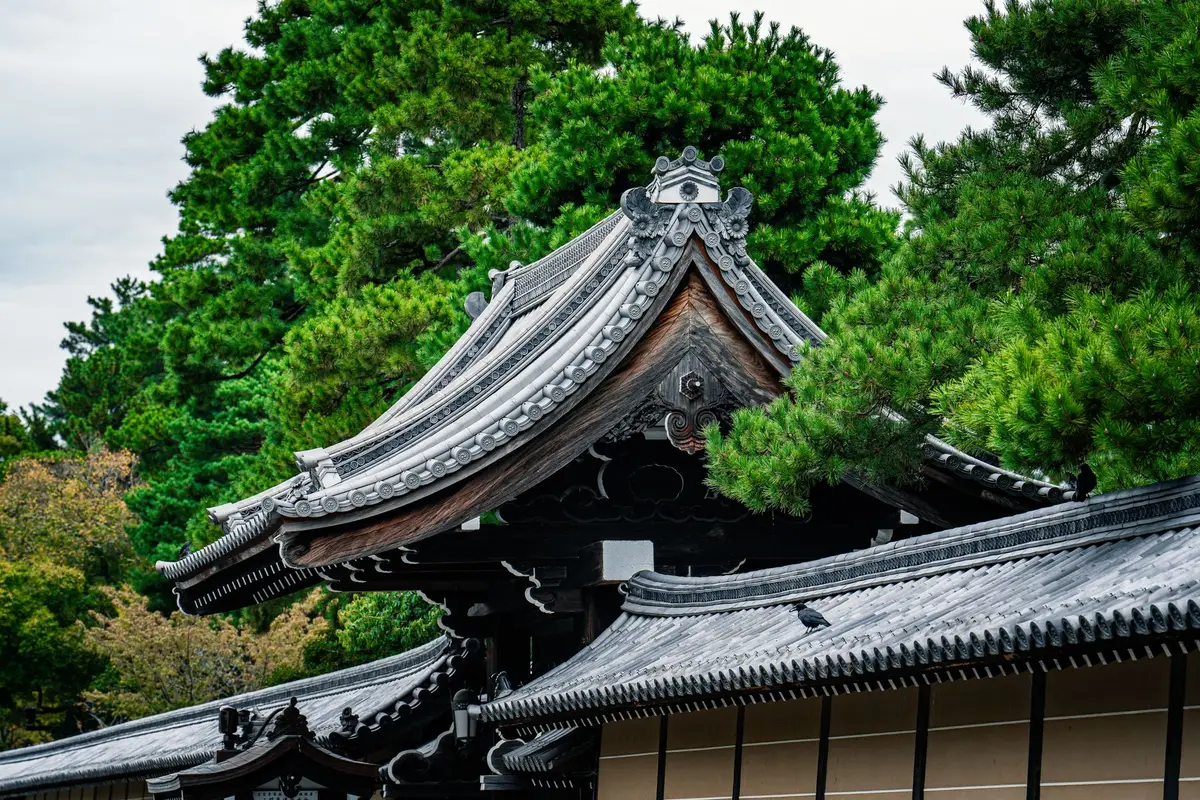
The main hall enshrines Kurikara Fudo, a form of the fierce guardian Fudo Myoo shown as a dragon coiled around a sword. Around it are halls from different centuries. According to the temple's own history, the main hall was rebuilt in 1720, the Kannon Hall dates from the early 1650s, and the stone bridge below the main hall was laid in the Manji era (1658–1661). The Shugen Hall holds a small exhibition of ritual objects, statues and texts tied to the mountain's tradition.
4. Try a day of yamabushi training
Shipporyuji runs a one-day training experience: guided by the temple's practitioners, you walk the mountain's prayer sites and finish with waterfall training at Gyoja-no-taki. Booking is required, through a form on the temple website or by phone, and the temple posts notices when bookings close, so check before you plan around it. Communication is mostly in Japanese.
5. Soak in an Inunakisan hot spring
Below the temple, along the road back to the bus stop, is a small hot spring area. The inns the temple lists include Fudoguchikan, Minamitei and the Inunaki Onsen Center. Fudoguchikan, for example, has an indoor bath and an open-air bath by the stream and accepts day visitors on most days. It is a good way to end the walk before heading to the airport or the city.
6. Walk down to the rice fields of Oki
The farming district of Oki, at the foot of the mountain, was selected in 2013 as Osaka's first Important Cultural Landscape, "the rural landscape of Hinenosho Oki." Izumisano City explains that the irrigation channels here, including the Inunaki channel, have been used since medieval times when the area was part of Hinenosho, a manor owned by the noble Kujo family about 800 years ago. Each October the local community council opens a cosmos flower garden in unused rice fields.
How to get to Inunakisan
By air: Fly into Kansai International Airport (KIX). It is the closest major airport by far, which is what makes Inunakisan an easy first or last stop on a Japan trip.
By train and bus: From KIX, take the Nankai Airport Line to Izumisano Station, or the JR Kansai Airport Line to Hineno Station, where it joins the JR Hanwa Line. From either station, Nankai buses bound for Inunakisan run to the last stop; the ride is about 40 minutes from Izumisano. From Osaka, Nankai trains run from Namba to Izumisano. Buses are not frequent, so check the Nankai Bus timetable before you go, especially for the return.
By car: The Japan Heritage site gives about 20 minutes from Kaminogo Interchange on the Kansai-Kuko Expressway. According to the temple, you can cross Ichinosho Bridge about 100 m before the bus terminus and follow the Inunaki forest road for about 1.5 km to a 50-car lot below the main hall, about a five-minute walk from it.
Where to stay
You have three choices. The Inunakisan hot spring inns let you stay inside the valley, which suits a quiet night before an early flight. Shipporyuji also runs a temple lodging, Hakuunkaku, but it is intended for practitioners. Most travelers will base themselves in Namba: Nankai trains connect it to both Izumisano and KIX, so you can do Inunakisan as a day trip and keep the city for evenings.
Sample itinerary
Half day (arrival or departure day):
- Morning: train from KIX or Namba to Izumisano, then the bus to the Inunakisan terminus.
- Walk the stream path, visit the main hall, Gyoja-no-taki and the Shugen Hall.
- Lunch or a bath at one of the hot spring inns.
- Afternoon: bus back to Izumisano and on to KIX or Namba.
Full day: Add the walk down through the Oki rice fields in October for the cosmos garden, or time your visit for a festival day.
Tips before you go
- Fire-walking festivals: The New Greenery Yamabushi Festival is held on Showa Day (April 29), with a large fire ritual (saito goma), rice-cake throwing and fire-walking. Another fire ritual with fire-walking is held on the first Sunday of November in front of the Migawari Fudo statue.
- Other temple events: New Year fire rituals run from January 1 to 8, the mountain-opening rites take place on the first Sunday of March, and the Otaki Matsuri waterfall festival is on the Sunday closest to August 28. Dates can change, so check the temple's events page.
- Cucumber blessing: On the midsummer Day of the Ox in July, the temple holds an overnight rite in which illness is "sealed" into cucumbers, a local custom you will rarely read about in English.
- Last bus: Buses to the terminus are limited, so note the last bus back before you start walking.
- Shoes: The path is easy but damp near the waterfalls. Wear shoes with grip.
- Opening hours: The temple grounds close in the late afternoon. Check the official website for current times.
- Respect training: If yamabushi are training at the waterfall, watch quietly and ask before taking photos.
FAQ
Is Inunakisan worth visiting? Yes, if you want a quiet mountain temple and waterfall walk without traveling far from Kansai Airport. It is a working Shugendo training ground and part of the Katsuragi Shugen Japan Heritage story.
How do I get to Inunakisan from Kansai Airport? Take the Nankai Airport Line to Izumisano Station or the JR Kansai Airport Line to Hineno Station, then a Nankai bus bound for Inunakisan to the last stop. The temple is a walk of about 1 km from there.
How do I get to Inunakisan from Osaka (Namba)? Take a Nankai train from Namba to Izumisano Station, then the Nankai bus to the Inunakisan terminus. Allow time for the bus connection, as services are limited.
Can tourists try waterfall training at Inunakisan? Shipporyuji offers a one-day training experience that ends with waterfall training, by reservation only. Check the temple website for whether bookings are open.
Check today's lowest fares to Japan and fly into Kansai International (KIX), the gateway to Osaka.