Nakazakicho Guide: Osaka's Retro Cafe Alleys Near Umeda, Japan
Published · 7 min read
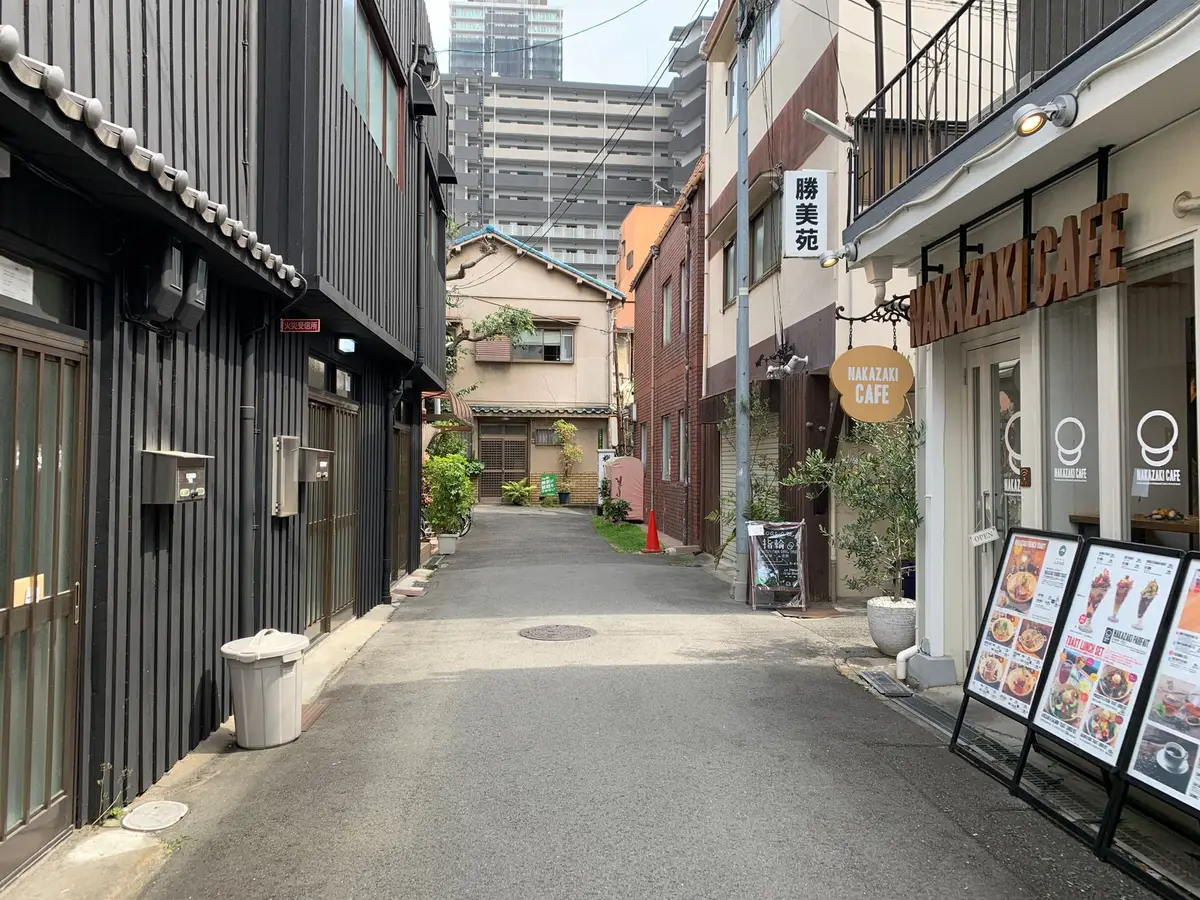
Nakazakicho is a small neighborhood of narrow lanes and old wooden row houses in Kita Ward, Osaka, just northeast of the towers of Umeda. Many of those houses, called nagaya (row houses that share their side walls), now hold cafes, vintage clothing stores, small galleries and craft shops, which is why Osaka people know it as a cafe town.
It is worth a detour because of the contrast. You can leave one of the busiest station areas in western Japan, walk for about ten minutes, and be in lanes where bicycles lean against wooden doors and potted plants line the gutters. This Nakazakicho guide is built from what Osaka's official tourism bureau and Japanese-language local guides publish, for travelers who want a slow morning or afternoon between bigger sights.
Quick facts
| Where | Nakazaki and Nakazaki-nishi, Kita Ward, Osaka City, northeast of Umeda |
| Nearest airport | Kansai International (KIX) or Osaka Itami (ITM), serving Osaka (OSA) |
| Nearest station | Nakazakicho Station (Osaka Metro Tanimachi Line), one stop from Higashi-Umeda |
| Best time | Any season; spring and autumn are best for walking, and ivy on some walls turns red in autumn |
| Time needed | Two to three hours; half a day with the bathhouse and Tenjinbashisuji |
| Getting around | On foot through narrow residential lanes |
Why Nakazakicho is worth the trip
Osaka was bombed several times during the Second World War, but Nakazakicho escaped the air raids. According to the Osaka Convention & Tourism Bureau, that is why so many old houses survive here, a good number of them more than 100 years old. Because row houses share walls, it was hard to rebuild them one at a time, so whole blocks stayed as they were while the city around them turned into glass and concrete.
For a while that was not a blessing. As residents aged and houses emptied, the area became quiet and run-down. The turning point came in 2001, when a cafe called Salon de AManTo started a project to renovate the old houses. The tourism bureau notes that a volunteer effort to bring empty houses back to life drew about 1,100 participants in total, and the attention it brought slowly turned Nakazakicho into the cafe neighborhood it is today, with a Showa-era (1926–1989) feel still in its lanes.
Today it is a mix of homes and small businesses: cafes, secondhand clothing shops, general stores, bars, hair salons and guesthouses. It is not a theme park, and that is the appeal. People still live behind many of these doors.
For more ideas in the city and beyond, our hidden gems in Osaka hub collects every Osaka guide on LowFare Lab.
Top things to do in Nakazakicho
1. Wander the back lanes without a plan
The best way to see Nakazakicho is to walk slowly and take side lanes. Japanese photo guides point out the details that make it: shop cats, antiques set out by the door, hand-painted signs, and planters along the house fronts. Many lanes are narrow and twist between houses, so getting lost is part of the fun.
2. Have coffee in a converted row house
Cafes are the main reason people come. Some are in old houses kept close to their original look, others are newer and more design-led, and the western side of the area along the JR Kyoto Line tracks has picked up a cluster of newer cafes. One long-standing example is Coffee-sha Shoshi Arabiq, a cafe in a row house built in 1929 that also has a bookshop and a gallery. Each shop sets its own hours and closing days, and small cafes here change often, so check a shop's social media before going out of your way for it.
3. Browse vintage clothing and small craft shops
Between the cafes are secondhand clothing stores, general stores and small galleries. They tend to be one-room shops run by their owners, so the stock is personal and changes often. It is a good place to look for a small gift that did not come from an airport shop.
4. Take a bath at a neighborhood sento
On the northern side of the neighborhood is Hamura Onsen, an old-style public bathhouse (sento). Osaka's tourism bureau suggests a simple route that many locals would recognize: walk up from Umeda, have lunch in Nakazakicho, then take a bath. Japanese sento listings note that it has a sauna and an outdoor bath. Bring a small towel, wash before you get in, and keep your towel out of the water.
5. Walk east to Tenjinbashisuji, Japan's longest shopping street
Head east from Nakazakicho along the Tengo-Nakazaki-dori shopping street, a modest local arcade, and you come out on Tenjinbashisuji. Osaka's official tourism site describes it as the longest shopping street in Japan, running about 2.6 km north to south from Tenjinbashi 1-chome to 7-chome, with around 800 shops. It is a good place for street food and everyday Osaka life.
6. Step into Edo-period Osaka at the Museum of Housing and Living
At Tenjinbashisuji 6-chome Station, a short walk from Nakazakicho, the Osaka Museum of Housing and Living has a full-size reconstruction of an Edo-period Osaka street, with merchant houses, a town office, a fire lookout tower and a bathhouse. Light and sound effects compress a whole day in the town into about 45 minutes. Exit 3 of the station connects directly to the building, so it pairs well with Nakazakicho on a rainy day.
How to get to Nakazakicho
By air: Fly into Kansai International Airport (KIX) for most international flights, or Osaka Itami (ITM) for domestic connections. Both have direct rail or airport limousine bus links to the Osaka Station and Umeda area. Itami is the closer of the two to Umeda.
By train from Umeda: Take the Osaka Metro Tanimachi Line one stop from Higashi-Umeda to Nakazakicho Station. Most people simply walk: Osaka's tourism bureau gives about ten minutes on foot from Hankyu Osaka-Umeda Station, heading north and east past Chayamachi.
From Tenjinbashisuji: Tenjinbashisuji 6-chome Station (Osaka Metro Tanimachi and Sakaisuji lines, Hankyu) and Tenma Station on the JR Osaka Loop Line are both within walking distance on the eastern side.
By car: Not recommended. There is no dedicated parking, the lanes are residential, and you would need to use coin parking lots around the area.
Where to stay
Umeda is the natural base. It is a ten-minute walk away, has the main rail hub for Kyoto, Kobe and both airports, and has hotels in every price range. If you are also planning to explore Minami, Namba works too: the Midosuji Line connects Umeda and Namba directly.
Sample itinerary
Half day in north Osaka:
- Late morning: walk from Hankyu Osaka-Umeda through Chayamachi into Nakazakicho.
- Lunch and coffee in a converted row house, then browse the vintage and craft shops.
- Afternoon: walk east along Tengo-Nakazaki-dori to Tenjinbashisuji and stroll the arcade.
- Visit the Osaka Museum of Housing and Living at Tenjinbashisuji 6-chome, or walk back to Nakazakicho for a bath at Hamura Onsen before dinner in Umeda.
Pair it with nature: If you are landing at or leaving from Kansai Airport, you can spend another half day in the hills near KIX. Our Inunakisan guide covers the waterfall walk and mountain temple a short ride from the airport.
Tips before you go
- Shop hours vary: Each cafe and shop keeps its own hours and closing days, so check the ones you most want to visit before you set out.
- It is a residential area: Japanese photo guides ask visitors to take pictures from the public road, not to walk into private alleys or up to doorways, to avoid flash on shop interiors and passers-by, and to keep tripods brief so they do not block the lane. They also ask visitors not to fly drones here.
- Coin lockers: Nakazakicho Station has coin lockers and restrooms, which helps if you are between hotel check-out and a flight.
- Bathhouse etiquette: At Hamura Onsen, check the closing day before you go, bring a small towel, and wash fully before entering the bath.
- Look for the history: The renovation project that revived the area started at Salon de AManTo in 2001. Knowing that, you will start to notice which houses have been restored and which still wait.
- Opening hours and prices: These change often, so check each shop's or facility's current information before you go.
FAQ
Is Nakazakicho worth visiting? Yes, if you like cafes, vintage shops and old neighborhoods. Many prewar row houses survive here, now home to small cafes and shops, and it is a short walk from Umeda.
How do I get to Nakazakicho from Osaka Station? Walk northeast past Hankyu Osaka-Umeda and Chayamachi; it takes about ten minutes. Or take the Osaka Metro Tanimachi Line one stop from Higashi-Umeda to Nakazakicho Station.
Why are there so many old houses in Nakazakicho? The area escaped the air raids of the Second World War, and its row houses share walls, which made it hard to rebuild them one by one. Since 2001, many empty houses have been renovated into cafes and shops.
What is near Nakazakicho? Umeda and Chayamachi are to the southwest, and Tenjinbashisuji, the longest shopping street in Japan, is a short walk east, along with the Osaka Museum of Housing and Living.
Check today's lowest fares to Japan and fly into Kansai International (KIX) or Itami (ITM), the gateways to Osaka.